| Home Top Stories Exclusive Technology Events & News Brand Profile | ||
|
After a 96% Decline, What’s Next for Lab-Grown Diamond Prices? The Q2 2026 LGD Wholesale Price List
Lab-grown diamond prices declined by an average of 13% year over year, according to the Q2 2026 Lab-Grown Wholesale Price List. However, not all price changes were equal. While wholesale prices for larger lab-grown diamonds fell by double digits, wholesale prices for 1-carat rounds rose by 1%. The downward pressure on lab-grown diamond prices continues. Yet, the deceleration in the rate of decline that we previously noted is continuing as well. Overall, the steepest declines were recorded in larger stones, which historically carried the highest wholesale margins. That left them more exposed to retail and consumer pressure to lower prices. 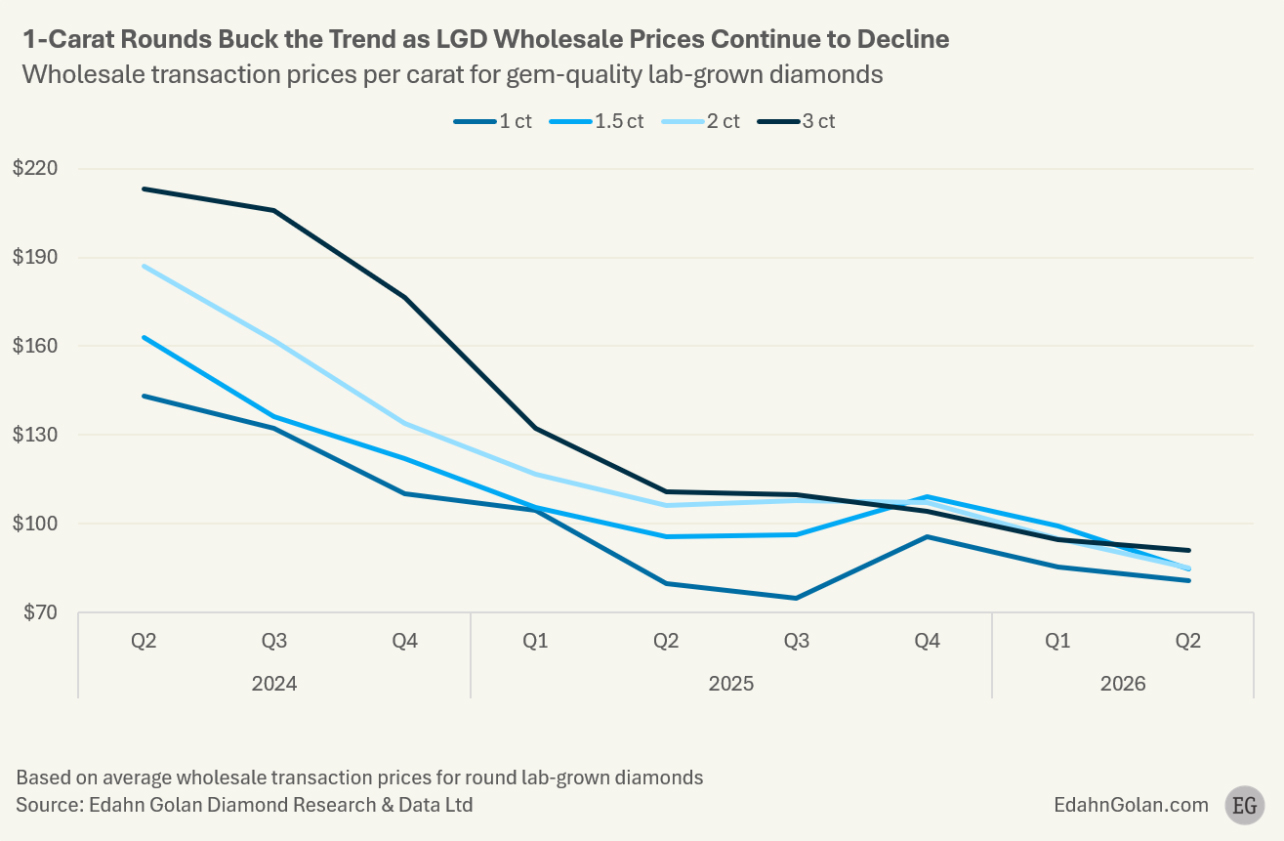
This trend persists. Wholesale prices for 1.50-1.99-carat diamonds declined 11% year over year, while prices for 2-carat stones fell 20%. The LGD Wholesale Price Index declined 13% year over year and is down 96% since we began tracking wholesale prices in July 2018. 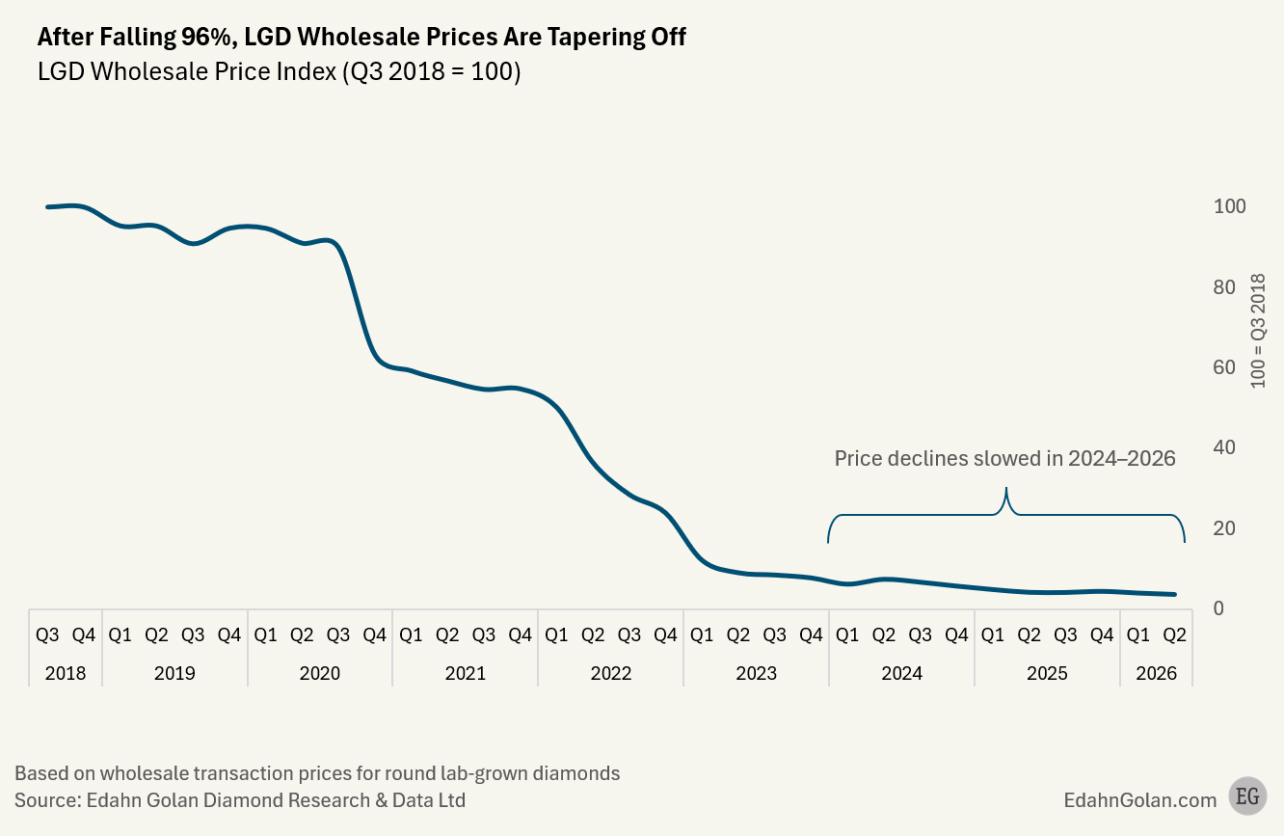
Bucking Economics 101 Conventional wisdom suggests that rising consumer demand leads to higher prices. That has not been the case for lab-grown diamonds, where prices have continued to decline despite soaring demand. This is not the only way lab-grown diamonds defy conventional market behavior. Demand for 1-carat stones has slowed as 2- and 3-carat diamonds have become more affordable. Normally, weaker demand would put further downward pressure on prices. Instead, wholesale prices for 1-carat stones are firming. This pattern can be seen throughout the lab-grown diamond value chain. Rough LGD Prices Are Rising Although wholesale and retail lab-grown diamond prices for polished lab-grown diamonds continue to decline, rough prices have recently moved higher. In China, producers increased prices by at least 30%, while Diamond Foundry reportedly raised prices by about 25% in the last few weeks. Given growers’ very low production costs, these increases are widely viewed as opportunistic moves in a consolidating market rather than a response to consumer demand. This is particularly notable against the backdrop of declining retail polished lab-grown diamond prices and elevated retail inventory levels. Consumers Buy More, But Spend the Same US specialty retailers’ sales of lab-grown diamond jewelry increased 24% during the second quarter, according to Tenoris.bi. Importantly, revenue growth was accompanied by higher unit sales. The limitation is that consumers remain unwilling to spend more on lab-grown diamond jewelry. For the past 18 months, average spending has remained within a relatively narrow range, suggesting that shoppers continue to buy within the same fixed budget. 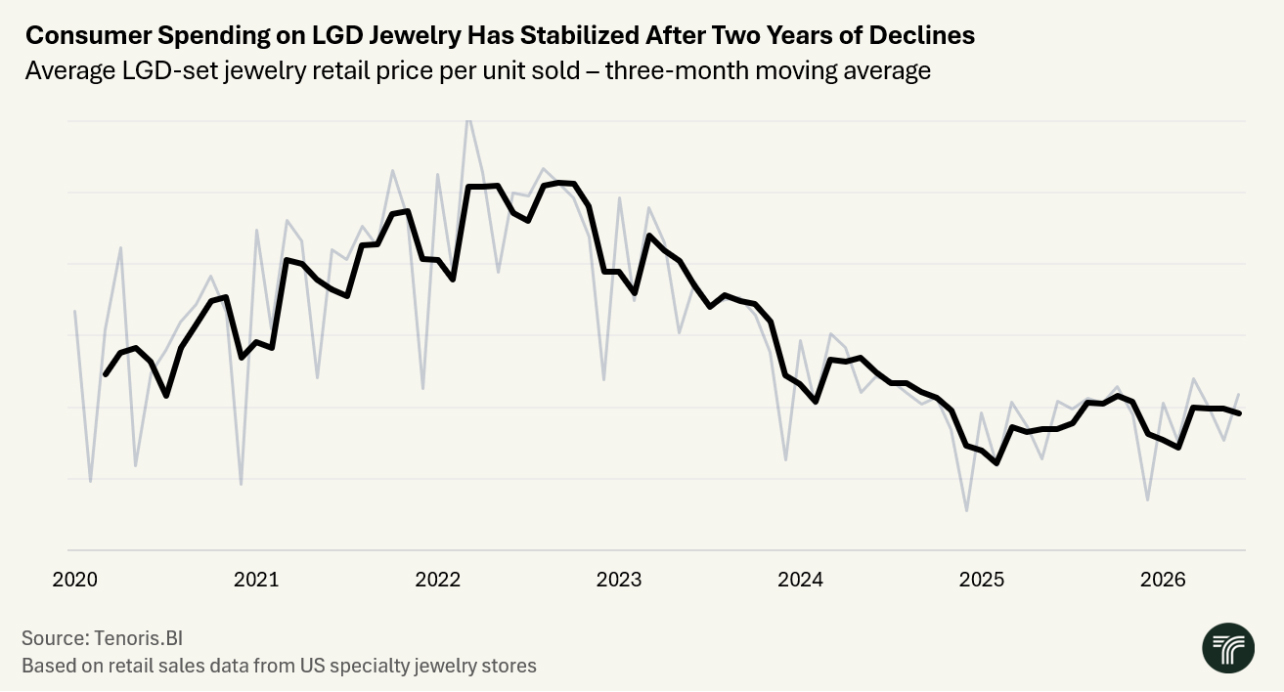
The Bottom Line After years of falling lab-grown diamond prices, the market appears to be stabilizing from production through retail. Recent retail data suggest that falling lab-grown diamond prices continue to drive unit demand, while stable prices are associated with relatively stable sales volumes. The industry’s future is unlikely to be determined by comparisons with natural diamonds. Instead, success will depend on establishing products within the price ranges consumers have already shown they are comfortable with, neither too expensive nor too inexpensive. About the Lab-Grown Diamond Wholesale Price List Launched in October 2018, the LGD Wholesale Price List was created in response to industry demand for a reliable benchmark for lab-grown diamond wholesale pricing. It initially tracked transaction prices for low-priced, uncertified loose lab-grown diamonds sold by polishers. As the market matured, the list evolved to reflect transaction prices for larger, certified lab-grown diamonds in better makes based on small-volume purchases. Today, most lab-grown diamonds weighing two carats and above are CVD-grown, while smaller goods include both CVD and HPHT growth technics, with HPHT diamonds typically trading at a discount. The price list is based on cash transactions in Mumbai and Surat for IGI-certified goods. Prices exclude shipping, insurance, and import duties. |
||